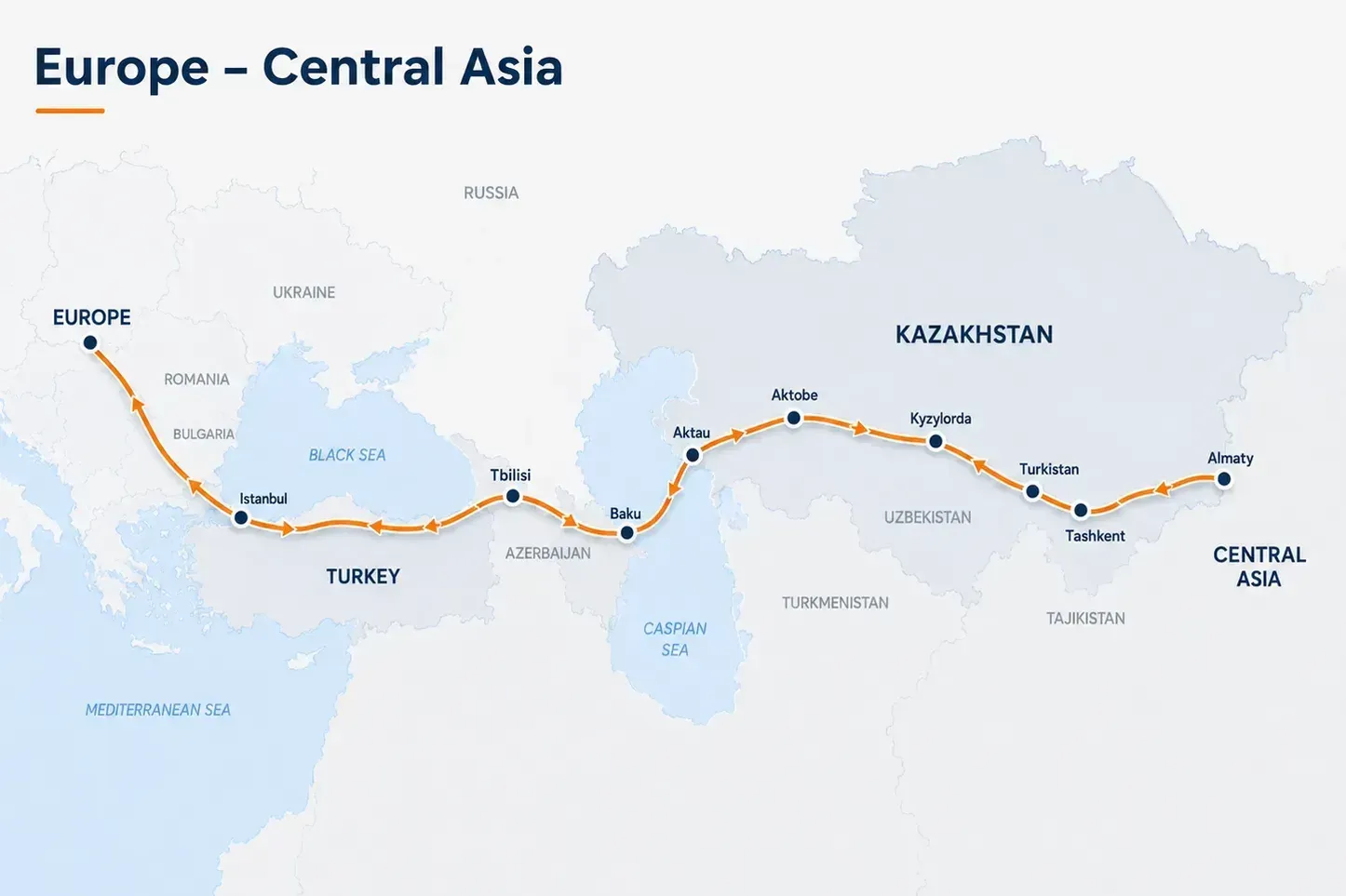
About the Europe–Central Asia route
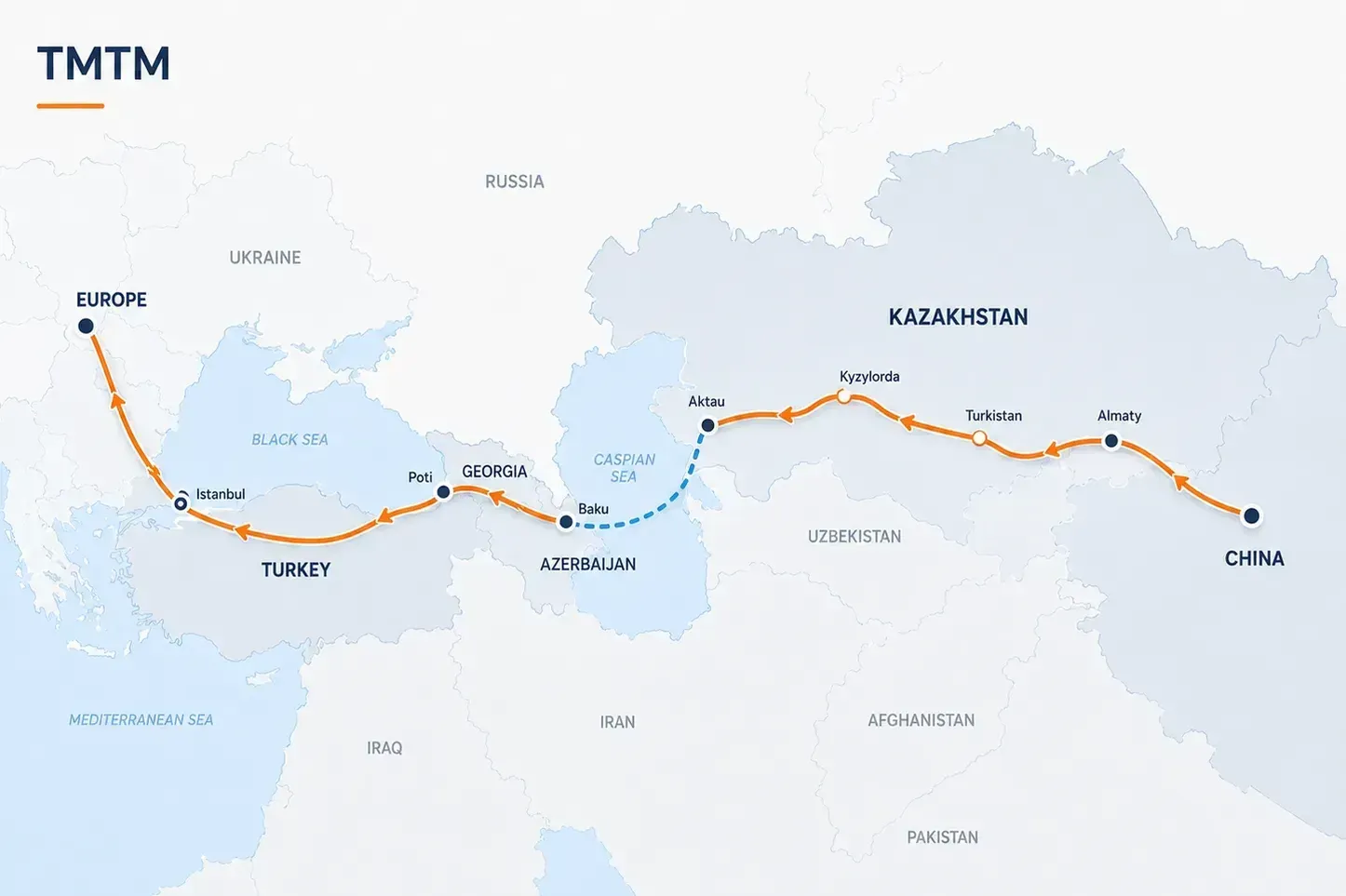
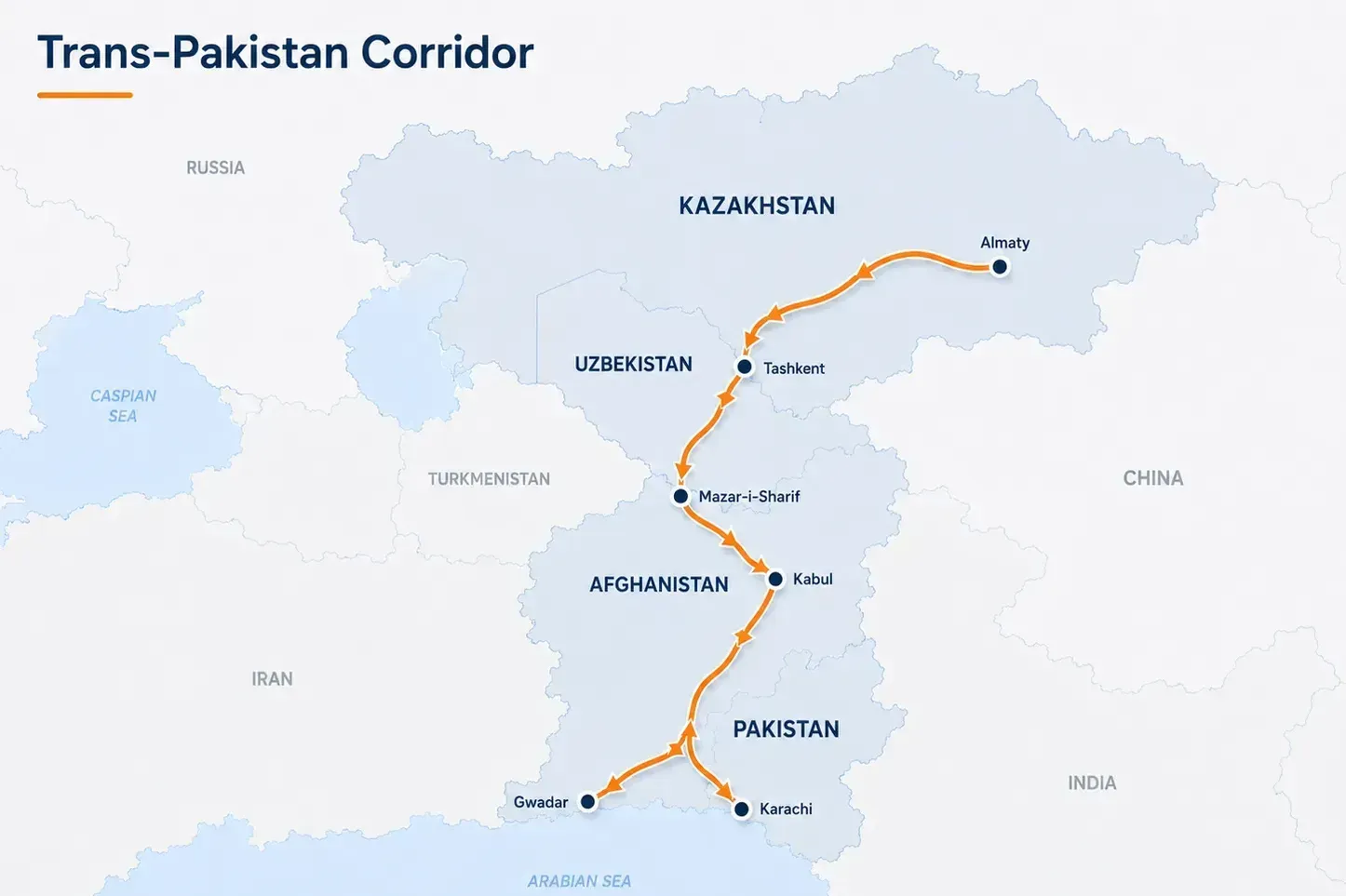
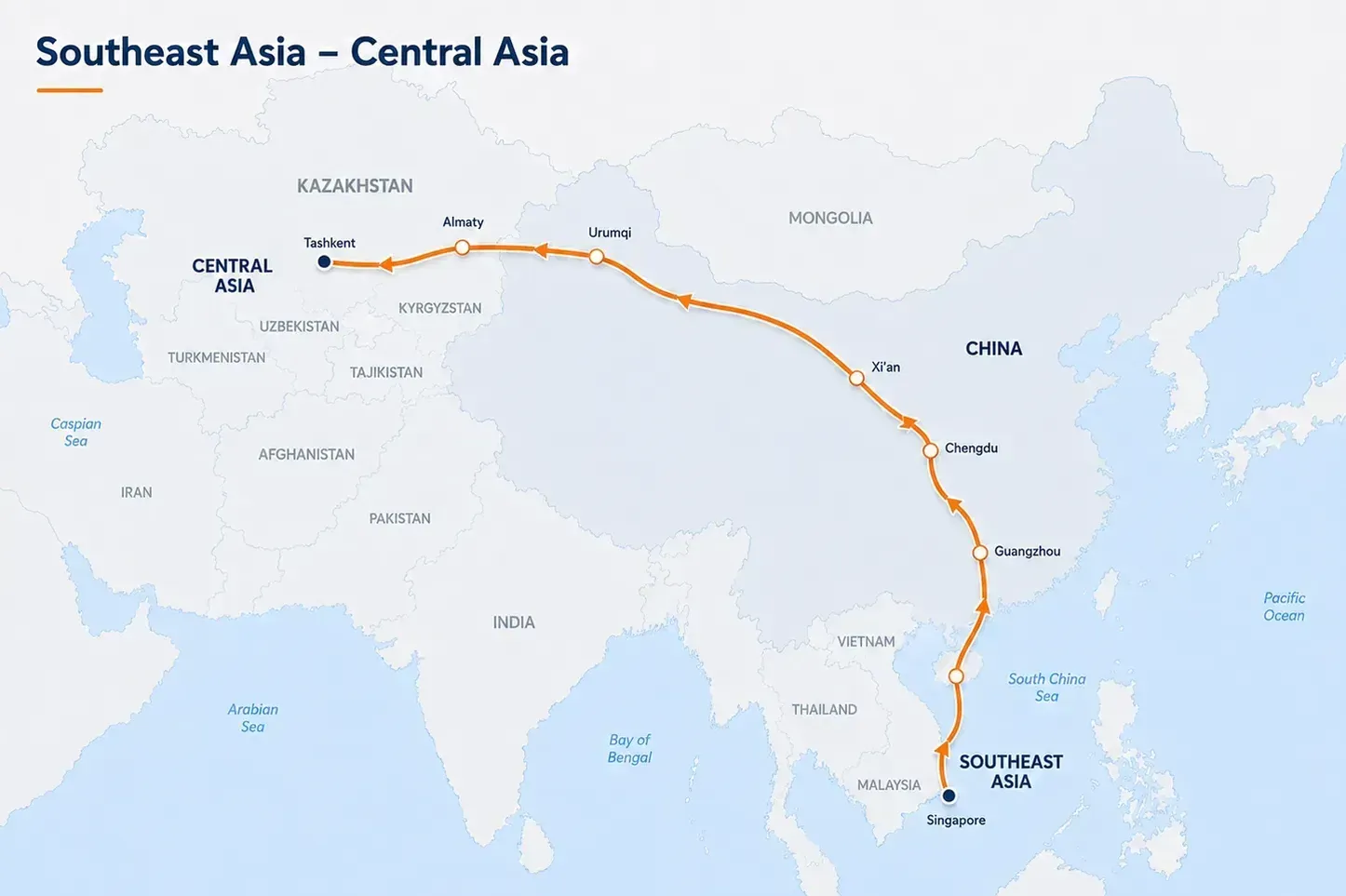
This direction is used for shipments between European countries and Kazakhstan, Uzbekistan, Kyrgyzstan, Tajikistan and Turkmenistan. Depending on geography, cargo characteristics and current infrastructure availability, road, rail and multimodal schemes may be used.
A direct road solution may be optimal for one shipment, while another may require rail or a combination of sea, rail and road legs. COLOS selects the route, coordinates carriers and terminals, checks documents and controls transport-mode changes.
Transportation process
01. Request analysis
We confirm the origin country and city, destination, cargo parameters, packaging and timing requirements.
02. Pickup and preparation
A truck, terminal delivery or consolidation warehouse is arranged.
03. Main European leg
The cargo moves to a rail terminal, port or agreed transit crossing.
04. International transit
Movement, documents, transshipments and handovers between carriers are controlled.
05. Entry into Central Asia
After the agreed crossing, the cargo is moved to a regional terminal or continues by road.
06. Final delivery
Final-mile delivery to a warehouse or production site is organized.
Route advantages
- road, rail or multimodal options;
- delivery to several Central Asian countries;
- solutions for consolidated shipments;
- suitable for industrial and commercial cargo;
- control of transit stages and transshipments;
- single coordination across the route.
Cargo categories
Industrial equipment, components, consumer goods, raw materials, supplies, containerized and consolidated shipments. Oversized, heavy, dangerous, temperature-controlled and other regulated cargo is reviewed separately after route feasibility checks.
Transit time and cost
Transit time and cost depend on the origin country, destination city, selected corridor, transport mode, number of transshipments, terminal operations, cargo weight, volume and special requirements. An accurate quotation requires confirmation of the currently available scheme.
Required documents
The document set depends on the commodity, route, transport mode and requirements of the countries involved.
- commercial invoice;
- packing list;
- product description and HS code;
- shipping instructions and shipper and consignee details;
- road, rail or sea waybill for the relevant leg;
- certificates of origin, conformity and quality when required;
- permits, licenses and safety data sheets for regulated cargo.
For review, provide the origin country and address, destination country and city, cargo characteristics, weight, volume, package count, dimensions, packaging, storage conditions and desired timing.