
About the Trans-Pakistan Corridor
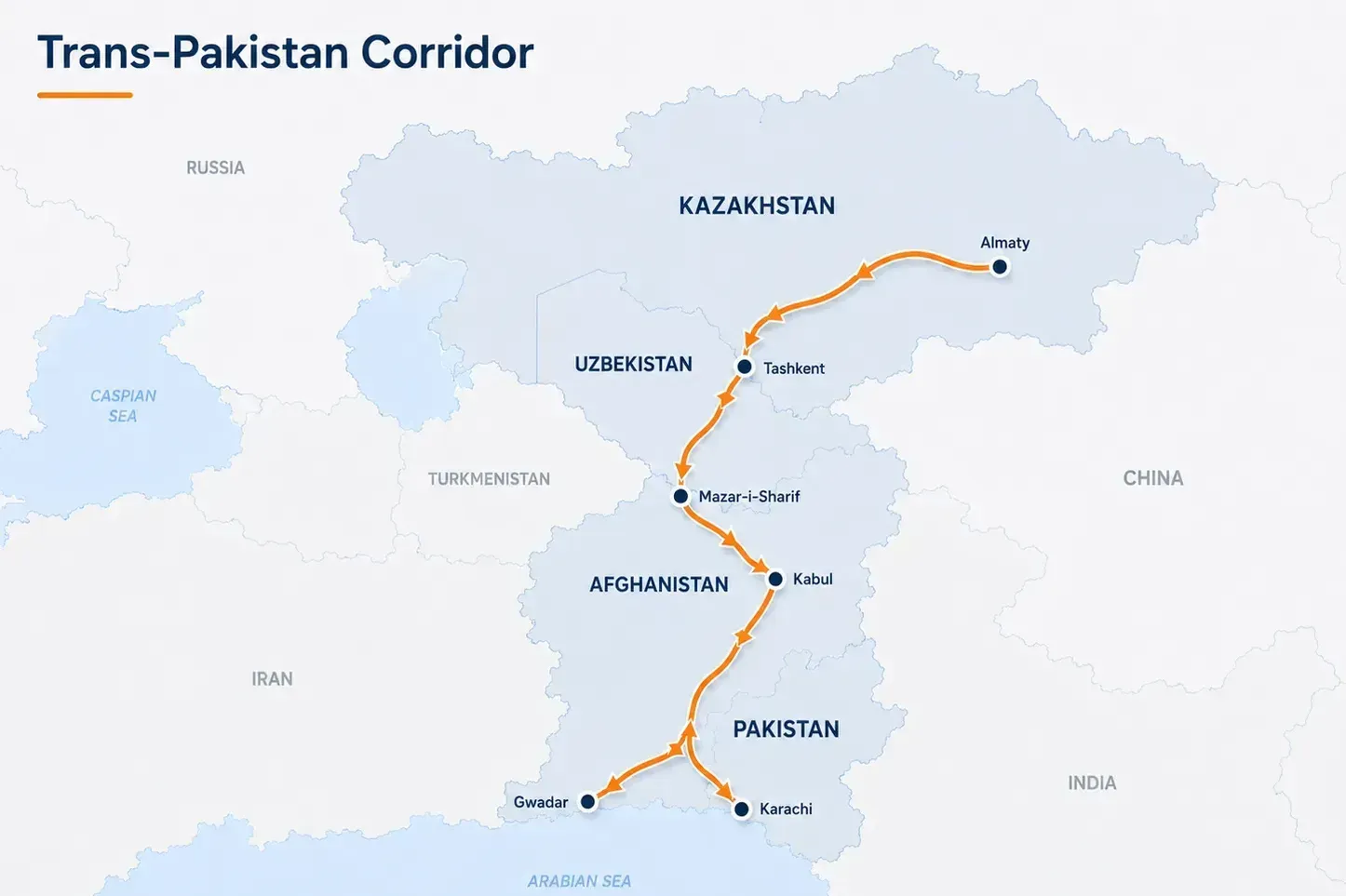
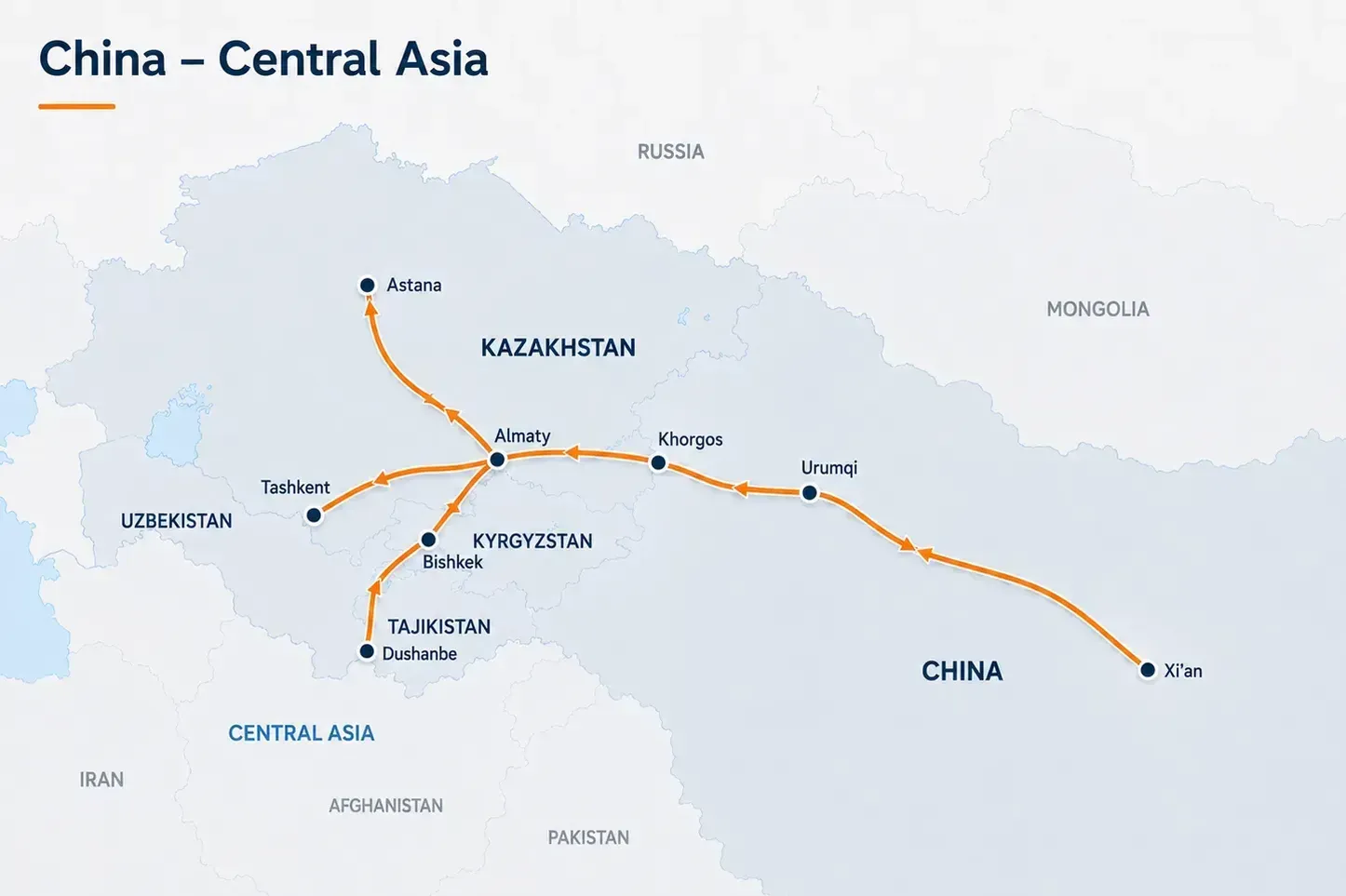
The Trans-Pakistan Corridor connects Central Asia with Pakistan's transport infrastructure and access to seaports. Depending on origin and destination, the scheme may include Kazakhstan, Uzbekistan, Afghanistan and Pakistan, with road and rail legs, terminal handling and port logistics.
Each route is planned individually, taking into account infrastructure conditions, border crossing operations, carrier availability, security requirements and cargo characteristics. COLOS coordinates the entire chain, checks restrictions, supports the documentation and controls cargo handovers between participants.
How transportation is organized
01. Cargo and route analysis
We confirm the commodity, HS code, weight, volume, dimensions, packaging, origin and final destination.
02. Ground route planning
Rail and road legs, terminals and border crossings are selected.
03. Transit through Central Asia and Afghanistan
Current requirements, route availability, permits and the ability to handle the cargo are checked before dispatch.
04. Delivery to Pakistan
The cargo is moved to the selected terminal or port for acceptance, transshipment and preparation for onward transportation.
05. Sea or domestic leg
Depending on the task, the cargo is handed over to a shipping line or delivered to a consignee in Pakistan.
Route advantages
- access from Central Asia to Pakistan's port infrastructure;
- a combination of rail, road and sea transport;
- flexible planning for specific cargo parameters;
- single coordination of carriers and terminals;
- control of documents and key stages;
- organization of final-mile delivery.
Cargo categories
Containerized and consolidated shipments, industrial equipment, components, consumer goods, raw materials and supplies. Oversized, heavy, dangerous, temperature-controlled and other regulated cargo is accepted only after route-by-route feasibility checks.
Transit time and cost
Transit time and cost are calculated individually. They depend on route length, the number of transshipments, border and terminal operations, transport availability, port schedules, cargo weight, volume, dimensions and special requirements.
Required documents
The final list depends on the cargo, transit countries and transport mode.
- commercial invoice;
- packing list;
- product description and HS code;
- shipping instructions and shipper and consignee details;
- rail, road or sea waybill for the relevant leg;
- certificates of origin, conformity and quality when required;
- permits, licenses and safety data sheets for regulated cargo.
For preliminary review, provide origin and destination, cargo characteristics, weight, volume, package count, dimensions, packaging and any special transport conditions.