About the route
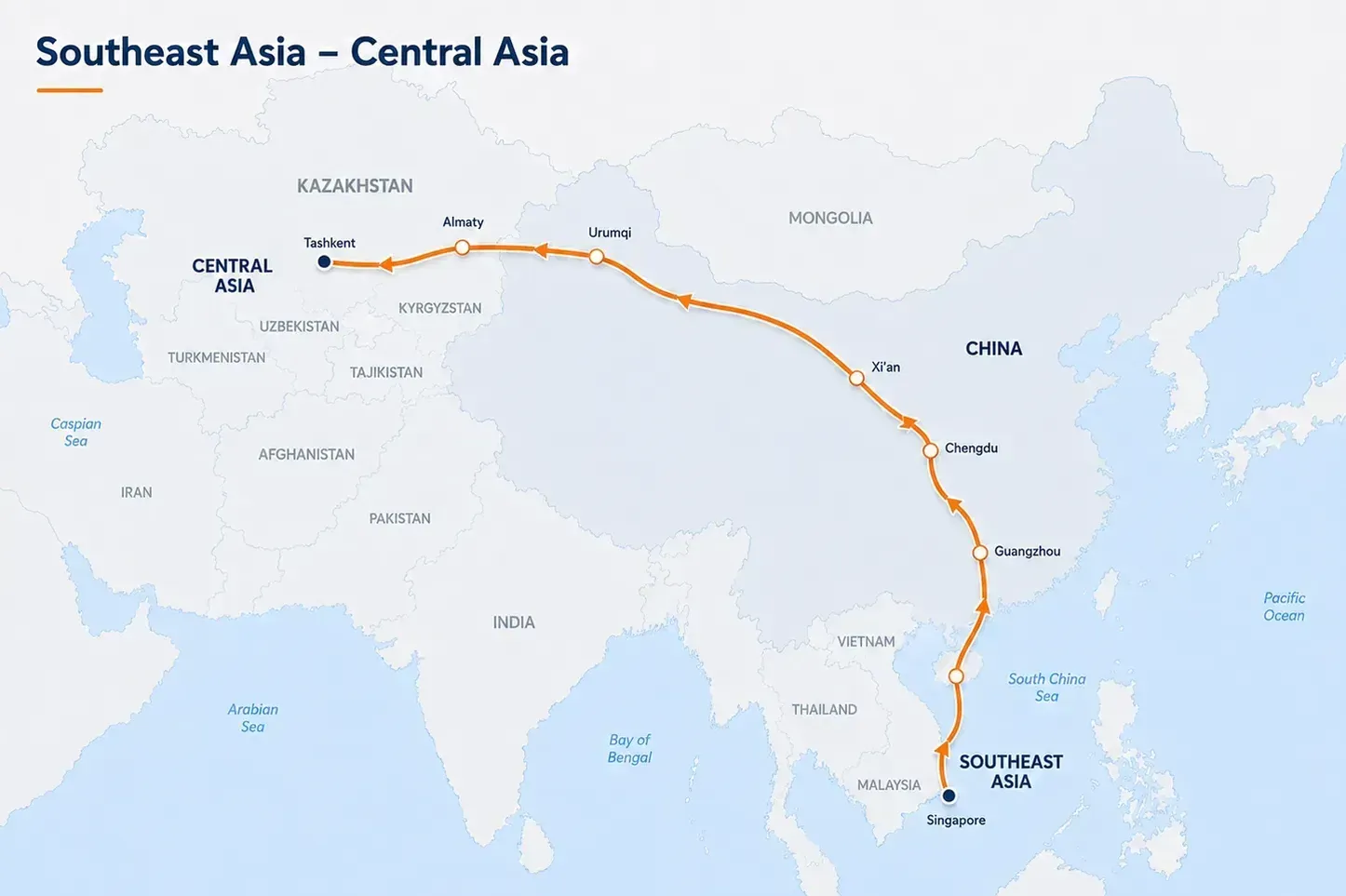
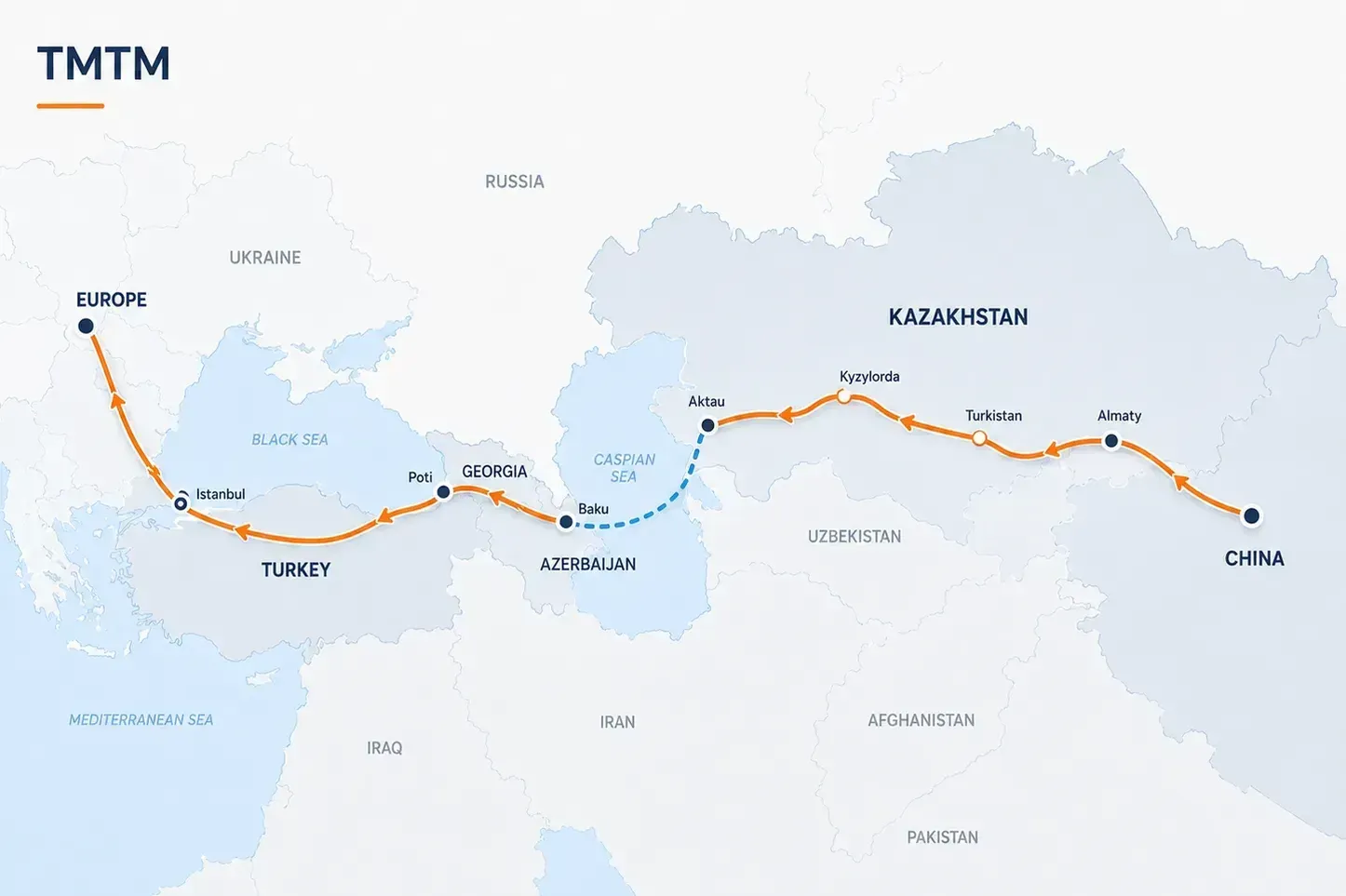
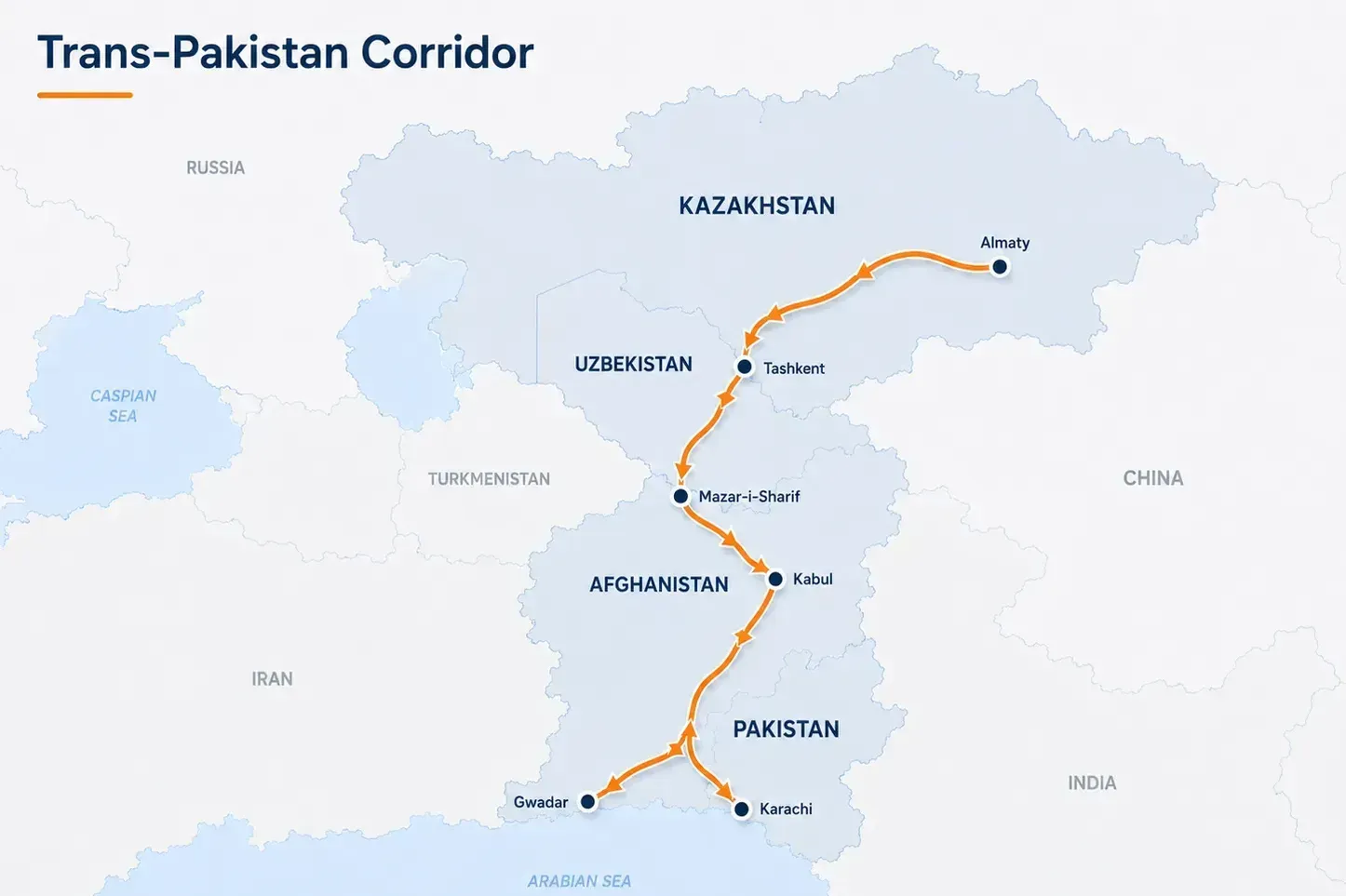
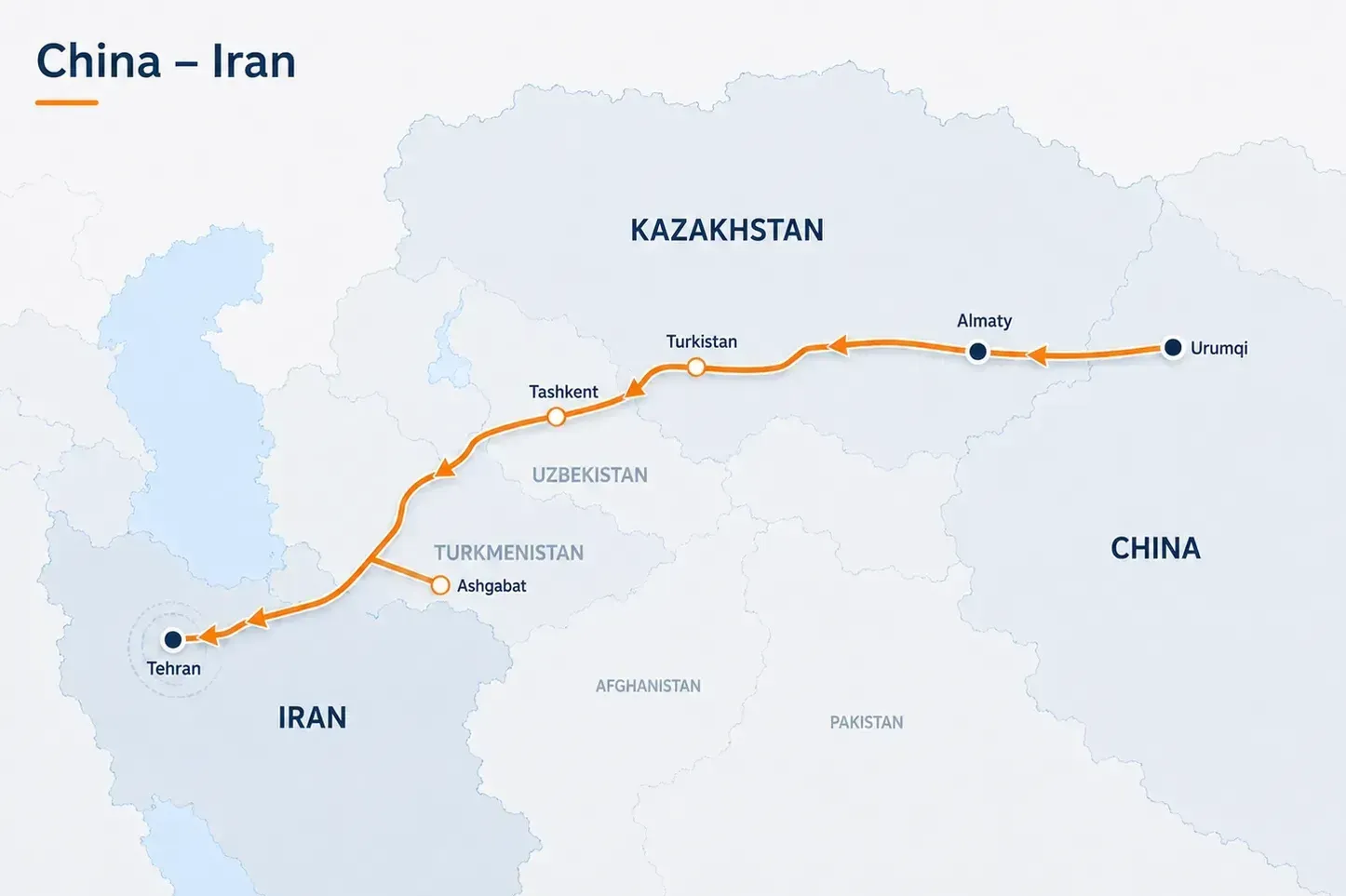
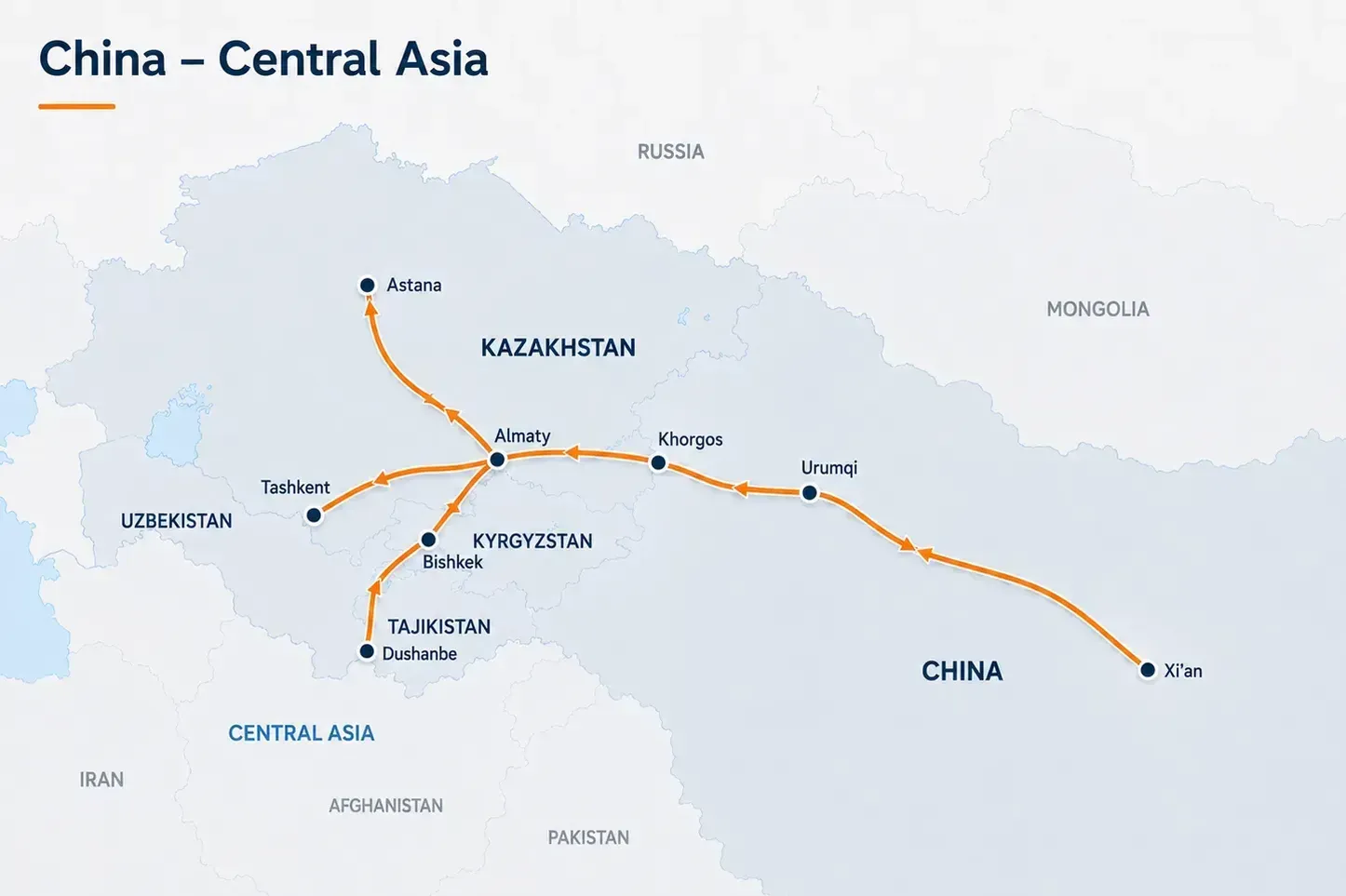
This route connects Southeast Asian countries with Kazakhstan and other Central Asian markets. Depending on origin and destination, transportation may combine sea, rail and road legs, warehouse consolidation, terminal handling and several transshipments.
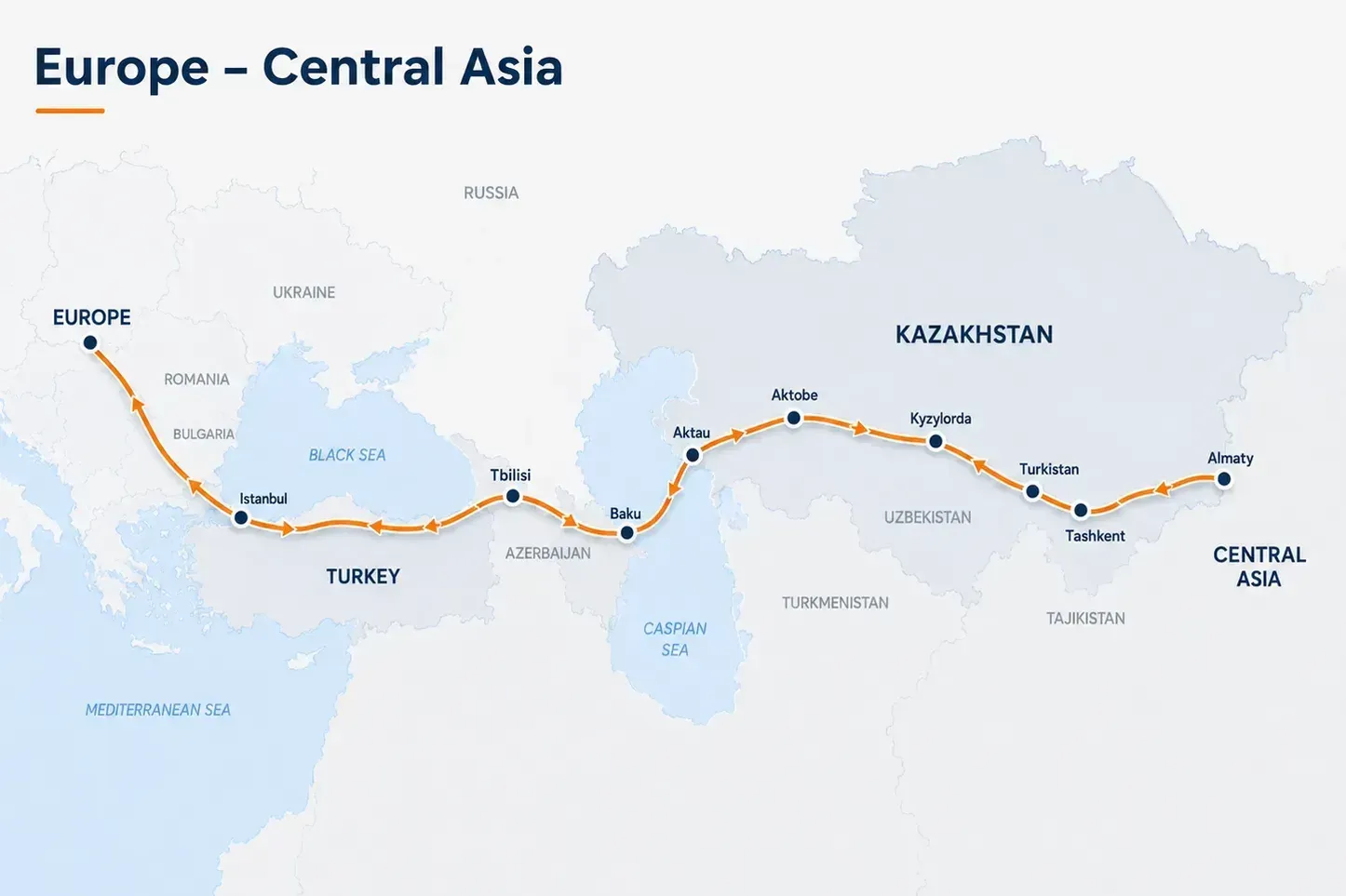
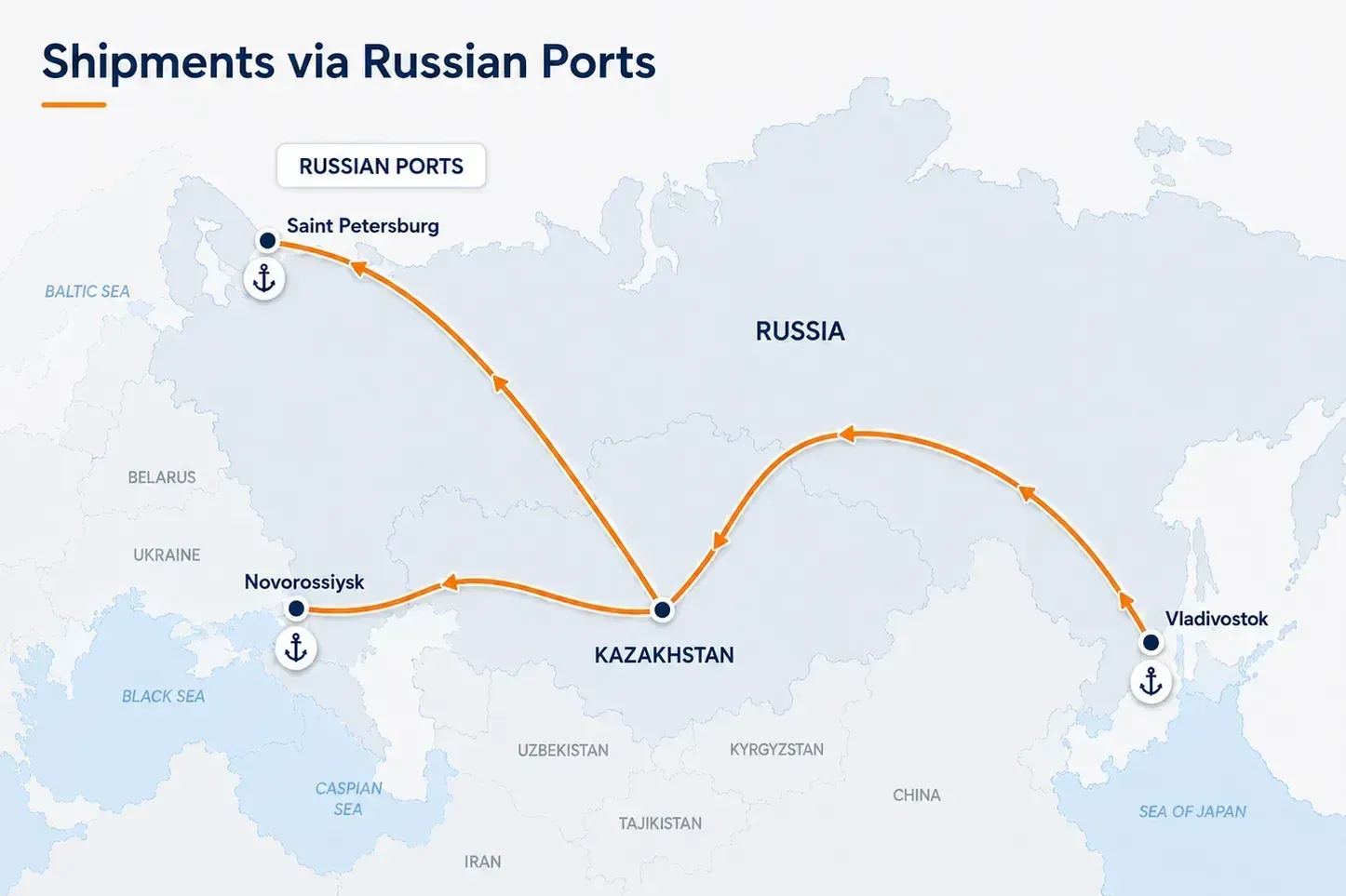
Cargo is often collected at a port or consolidation warehouse, moved by sea or land to a suitable transport hub and then routed through China or another approved corridor to Central Asia. COLOS selects the scheme, coordinates the participants and controls each cargo handover.
Transportation process
01. Data preparation
We confirm cargo characteristics, HS code, packaging, weight, volume, origin and destination.
02. Pickup and consolidation
The cargo is delivered to a port, terminal or consolidation warehouse. Smaller shipments may be combined into a consolidated load.
03. Main international leg
Transportation is arranged by sea, rail or a combined scheme to a hub suitable for onward movement to Central Asia.
04. Mode change and transit
Unloading, transshipment, document handover and onward transit through the agreed countries and crossings are coordinated.
05. Delivery in Central Asia
The cargo is moved to the destination terminal or directly to the consignee by road or rail.
Route advantages
- access to Southeast Asian manufacturing markets;
- combination of sea, rail and road transport;
- solutions for full and consolidated shipments;
- delivery to Kazakhstan and other Central Asian countries;
- control of transshipments and documents;
- one coordinator for the entire chain.
Cargo categories
Electronics, apparel, footwear, furniture, household appliances, industrial equipment, spare parts, production materials and containerized cargo. Oversized, dangerous, temperature-controlled, perishable and other regulated cargo is accepted after checking every route leg.
Transit time and cost
Transit time and cost depend on the country of origin, selected port or terminal, shipping line, route through China, number of transshipments, border congestion, transport mode, cargo weight and volume. There is no universal transit time for the entire direction.
Required documents
The list depends on the country of origin, cargo characteristics and selected transport scheme.
- commercial invoice;
- packing list;
- product description and HS code;
- shipping instructions and shipper and consignee details;
- sea, rail or road waybill for the relevant leg;
- certificates of origin, conformity and quality when required;
- permits, licenses and safety data sheets for regulated goods.
For quotation and review, provide the origin, final destination, weight, volume, package count, dimensions, packaging, cargo readiness and any special transport conditions.