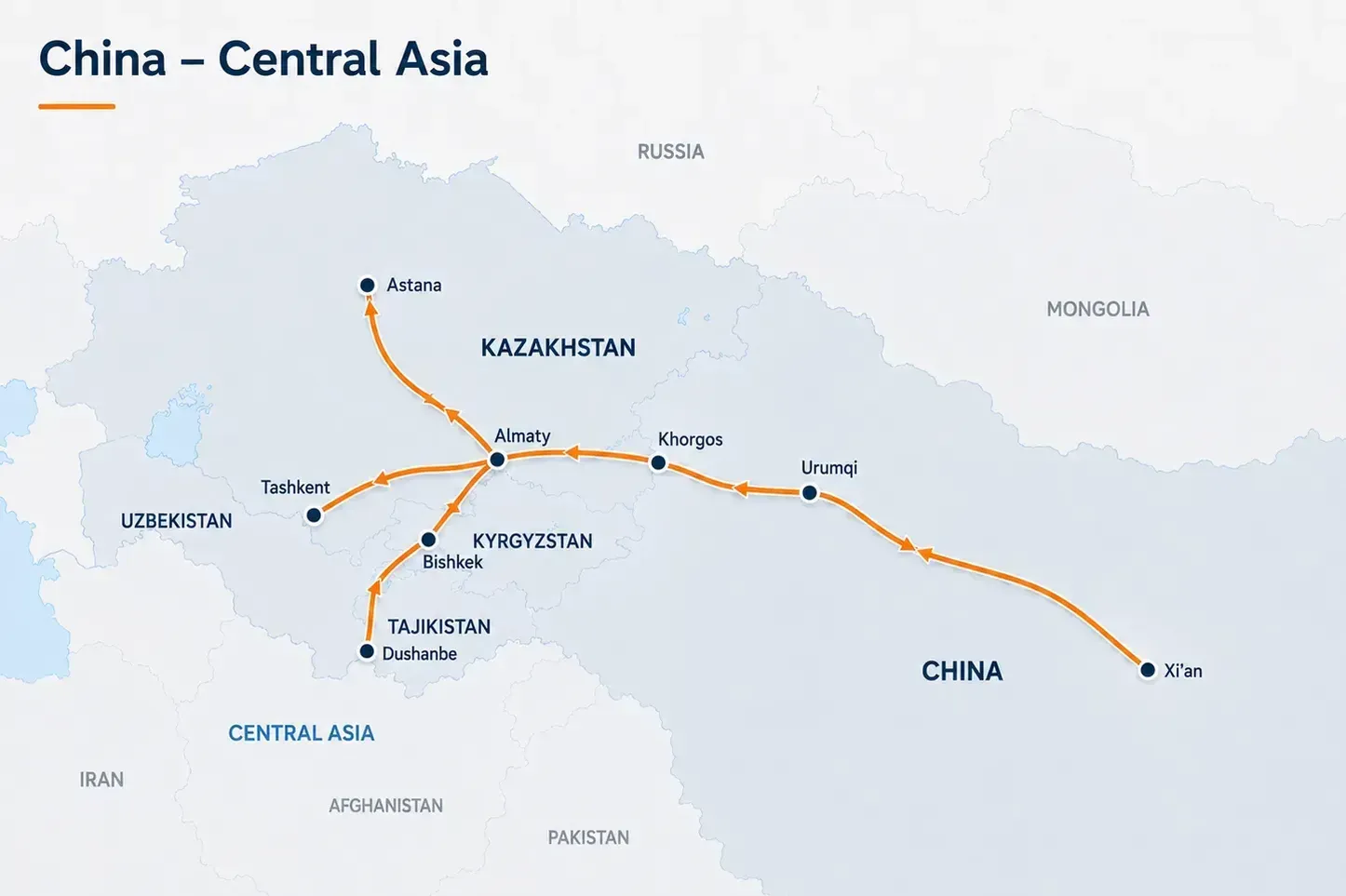
What is the TITR
The TITR is a multimodal route between Asia and Europe
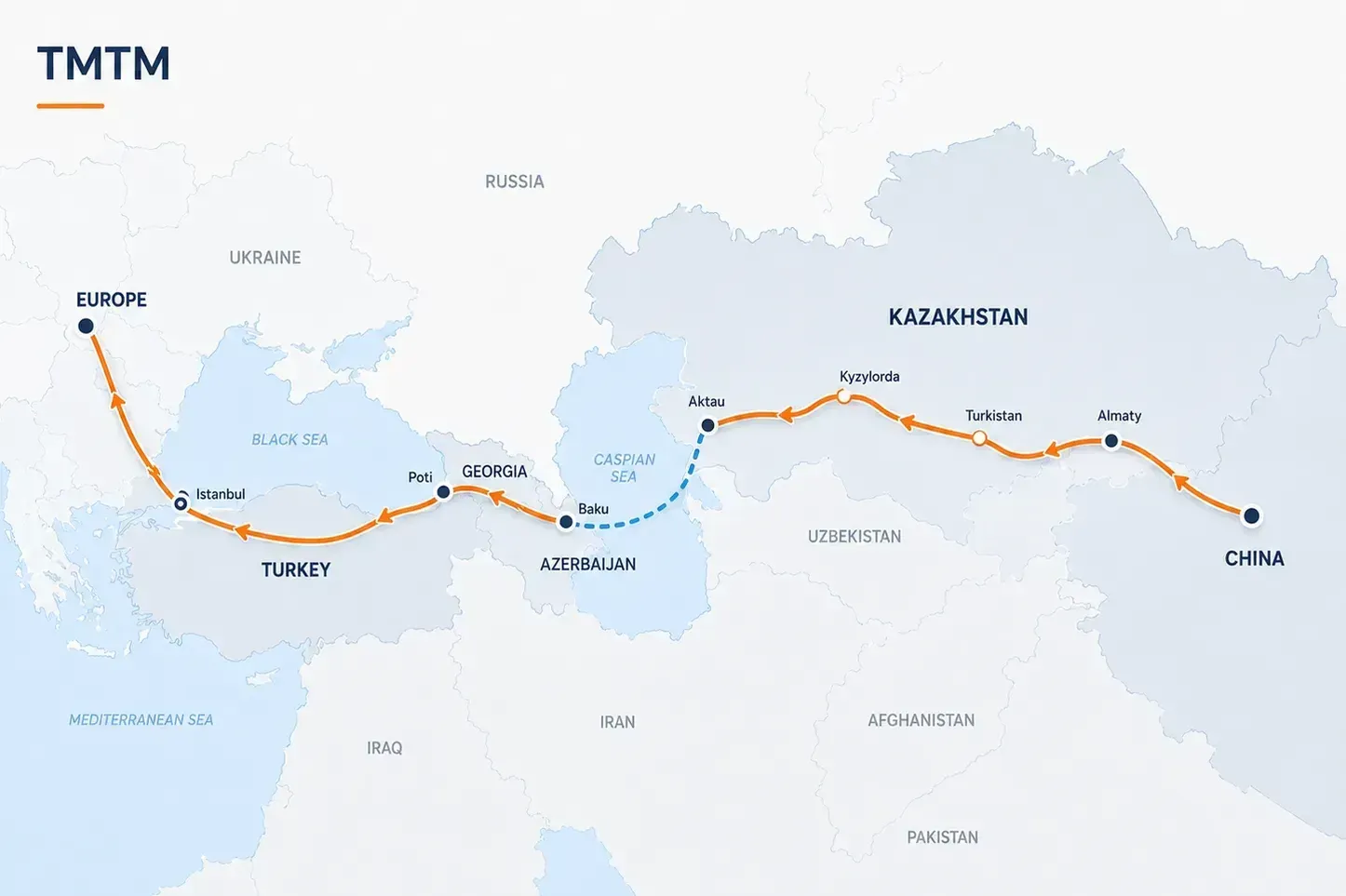
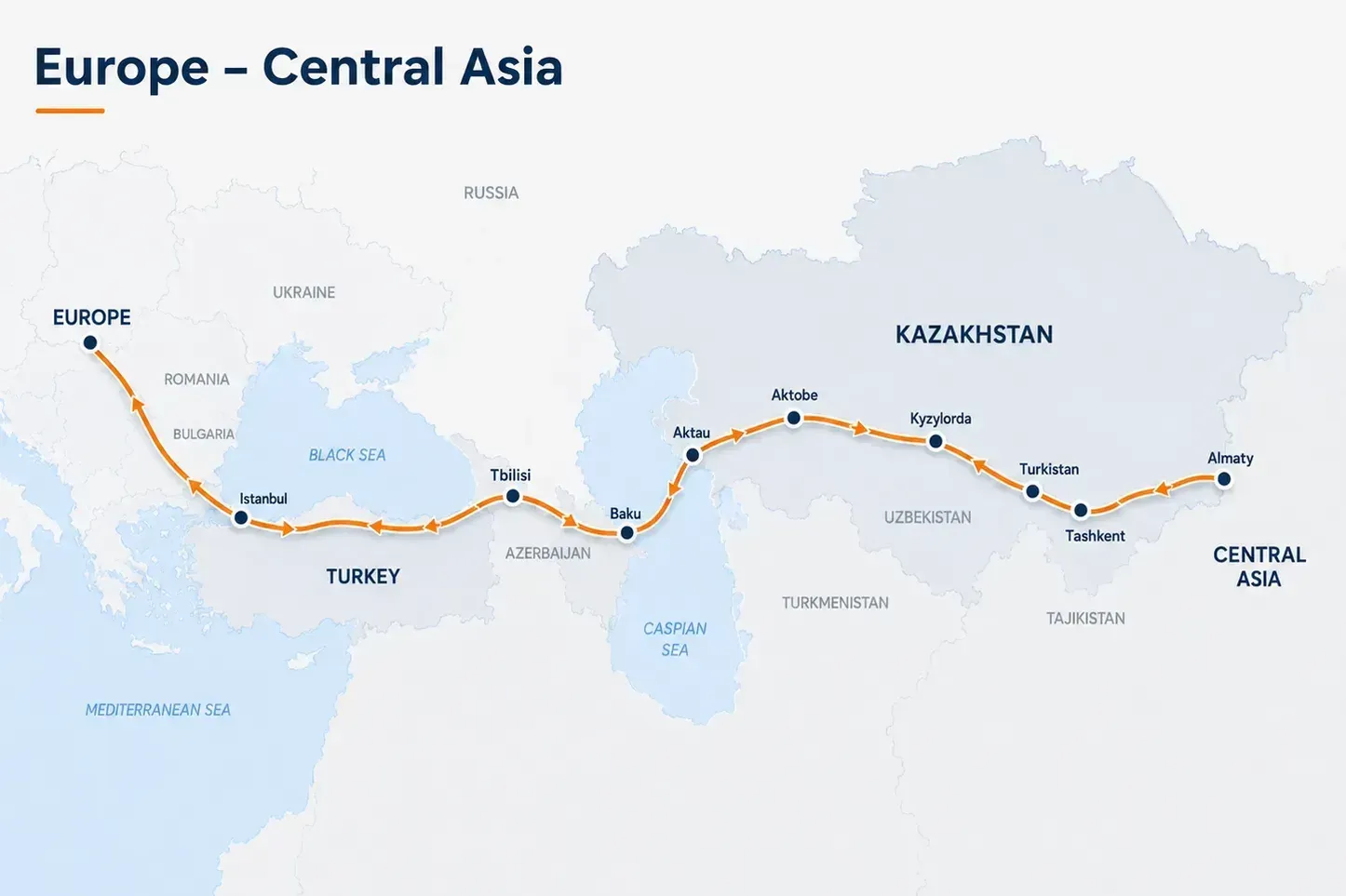
The Trans-Caspian International Transport Route (TITR), also known as the Middle Corridor, connects Asia and Europe through Kazakhstan, the Caspian Sea, Azerbaijan and Georgia. Depending on the destination, transportation may continue through Turkey or through Black Sea ports to European countries.
The TITR combines rail, sea and road transportation in one logistics chain. Stable delivery requires schedules, transshipment, transport documents, customs procedures and cooperation between route participants to be coordinated in advance.
COLOS manages TITR transportation as a single logistics process: it designs the delivery scheme, coordinates carriers and terminals, supports documents and monitors cargo at key stages.
Asia — Europe
The route connects the markets of Asia, the Caucasus, Turkey and Europe.
Multimodal scheme
Rail, sea and road sections are combined into one shipment.
Multiple countries and terminals
Carriers, ports, stations and customs representatives must work in coordination.
Single COLOS coordination
The client has one coordinator for the entire logistics chain.
Detailed route scheme
How TITR transportation works
TITR transportation consists of interconnected stages. COLOS builds the route for the specific cargo and controls transitions between rail, sea and road sections.
The actual scheme is selected individually based on origin, destination, cargo properties, available rolling stock, terminals and schedules.
01. Cargo preparation and dispatch
We collect cargo data, check route restrictions and agree on packaging, container or other rolling stock. When required, we collect cargo from the shipper and deliver it to the departure station or terminal.
02. Rail transportation to and across Kazakhstan
Cargo travels by rail through border crossings and key transport hubs in Kazakhstan. Documents, wagon or container movement and compliance with the agreed scheme are monitored.
03. Delivery to a Caspian port and terminal handling
The container or cargo lot is sent to Aktau or Kuryk. Terminal acceptance, document handling, consolidation when required and preparation for sea transport are arranged.
04. Caspian Sea crossing
After loading onto a vessel, cargo travels to Azerbaijan. Timing depends on schedules, weather, port congestion and document readiness.
05. Transit through Azerbaijan and Georgia
After unloading at Alat, cargo continues by rail or road through Azerbaijan and Georgia. COLOS coordinates transshipment, transit procedures and handover to the next carrier.
06. Delivery to Turkey or Europe
The final section may run through Turkey or Black Sea ports with onward delivery to Europe. The last mile to the consignee warehouse can be arranged.
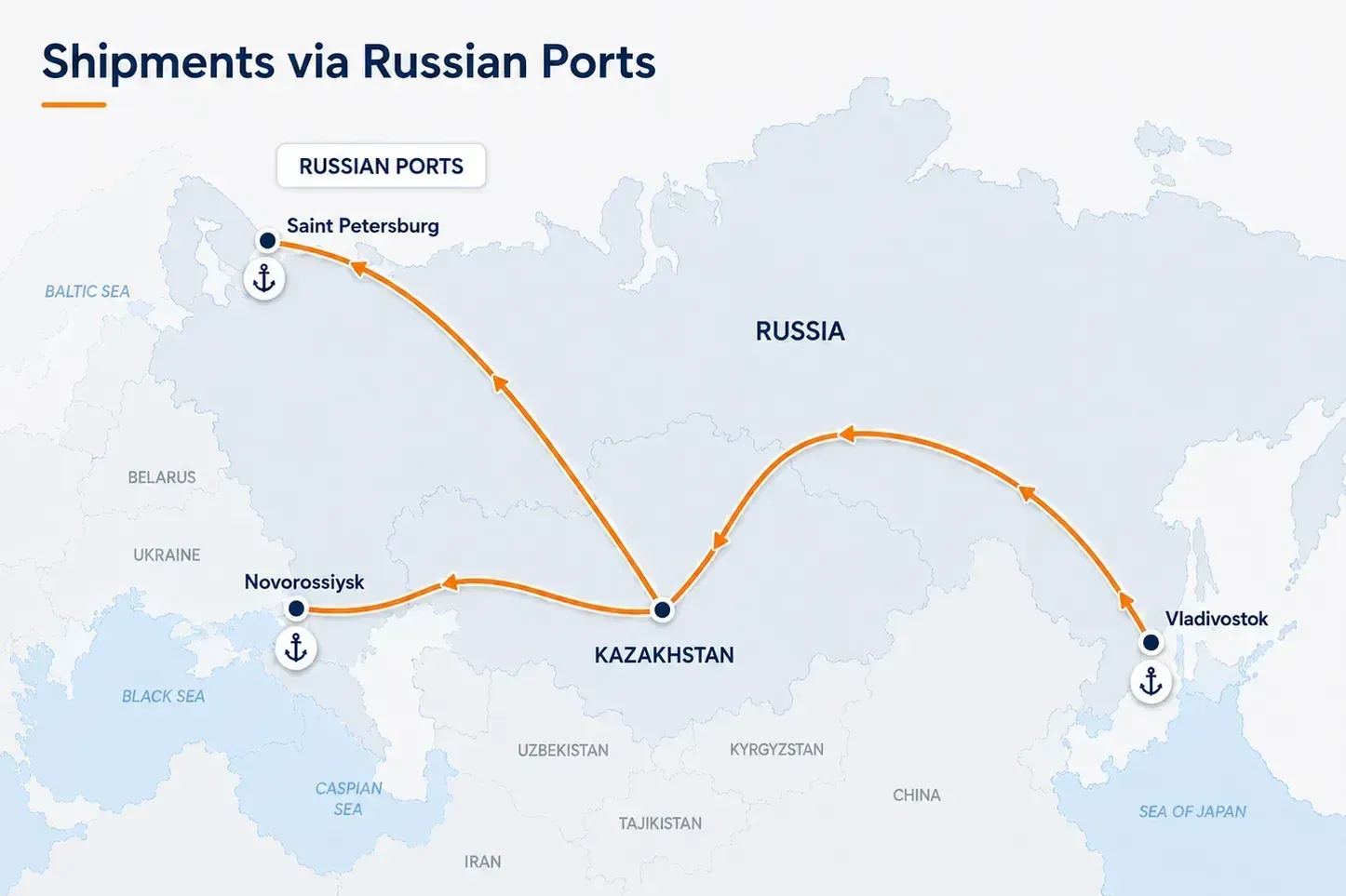
The route differs between shipments. Some cargo may require additional terminals, road sections, transshipment, permits or alternative gateways to Turkey and Europe.
Benefits of TITR transportation
The TITR builds an integrated Asia–Europe delivery chain using infrastructure in Kazakhstan, the Caspian region and the South Caucasus, while allowing transport modes to be combined flexibly.
Alternative logistics chain
The TITR diversifies international routes and reduces dependence on one transport scheme.
Combination of transport modes
Rail provides the main movement, the sea crossing connects the Caspian shores, and road transport covers the first and last mile.
Access to multiple markets
The route supports deliveries to Kazakhstan, Azerbaijan, Georgia, Turkey and European countries.
Suitable for container transportation
Containers simplify mode changes and protect cargo during transshipment.
Flexible routing
The scheme adapts to origin, destination, cargo type, timing and infrastructure availability.
Single coordination
COLOS coordinates carriers, terminals and customs participants, reducing the client operational workload.
Coordination between all stages is essential. COLOS checks routes, documents and restrictions in advance and monitors cargo handovers during transportation.
Cargo transported via the TITR
Commercial and industrial cargo can be transported via the TITR after checking cargo properties, packaging, dimensions, HS code and transit-country requirements.
Container cargo
Consolidated and full-load lots in standard and specialized containers.
Industrial equipment
Machinery, production lines, components and spare parts.
Consumer goods
Clothing, footwear, household goods, electronics, furniture and other commercial lots.
Raw materials
Industrial materials, packaging, construction and manufacturing components.
Automotive and engineering components
Spare parts, assemblies and components for production and service.
Oversized and heavy cargo
Project shipments requiring separate calculations, terminal approval, securing and permits.
Cargo with special conditions
Goods requiring temperature control, permits, marking or additional monitoring.
Other commercial cargo
We assess individually cargo that complies with carrier, port and route-country requirements.
Dangerous, perishable, excisable and other regulated cargo requires prior verification of classification, documents, packaging and handling eligibility.
TITR transit time and cost
Transit time and cost are calculated individually because the route involves rail operators, shipping lines, ports, terminals and road carriers.
COLOS analyses the route, cargo, transport type, transshipments and current tariffs, then provides a recommended scheme, estimated time, cost and required documents.
What affects transit time
- origin and final destination;
- cargo and document readiness;
- availability of containers, wagons or specialized rolling stock;
- rail and Caspian vessel schedules;
- border, port and terminal congestion;
- number of transshipments and consolidation;
- customs, transit and permit procedures;
- weather and navigation conditions;
- first and last mile arrangements.
What affects cost
- cargo weight, volume, dimensions and properties;
- container, wagon or vehicle type;
- departure and destination stations and terminals;
- rail tariff and sea freight;
- terminal handling, storage and transshipment;
- customs clearance and transit support;
- insurance, security and special requirements;
- road delivery to and from terminals.
A universal time or fixed price is not accurate. A current quotation requires the route, cargo description, weight, volume and delivery requirements.
Required documents
The document list depends on origin, destination, delivery terms, cargo and transit scheme. COLOS confirms carrier, terminal and customs requirements for each shipment.
Basic documents
- commercial invoice;
- packing list with packages, weight and dimensions;
- product description and HS code;
- transport instructions and shipper and consignee data;
- rail, road or sea consignment note for the relevant section;
- certificates of origin, conformity and quality when required;
- permits, licences, safety data sheets and special documents for regulated cargo.
Information required for document verification
- cargo name and detailed description;
- HS code if available;
- country of origin;
- origin and final destination;
- weight, volume, packages and dimensions;
- packaging and storage conditions;
- dangerous, temperature-controlled or special properties;
- contract delivery terms.
The final list is prepared after shipment review. Missing or inconsistent invoice, packing-list or transport data may cause terminal and customs delays.
Send COLOS the cargo description and available documents. Our specialists will review the data, identify missing documents and propose a suitable TITR scheme.